

Nothing Is Broken. It’s Just Being Mined.
Nothing Is Broken. It’s Just Being Mined.
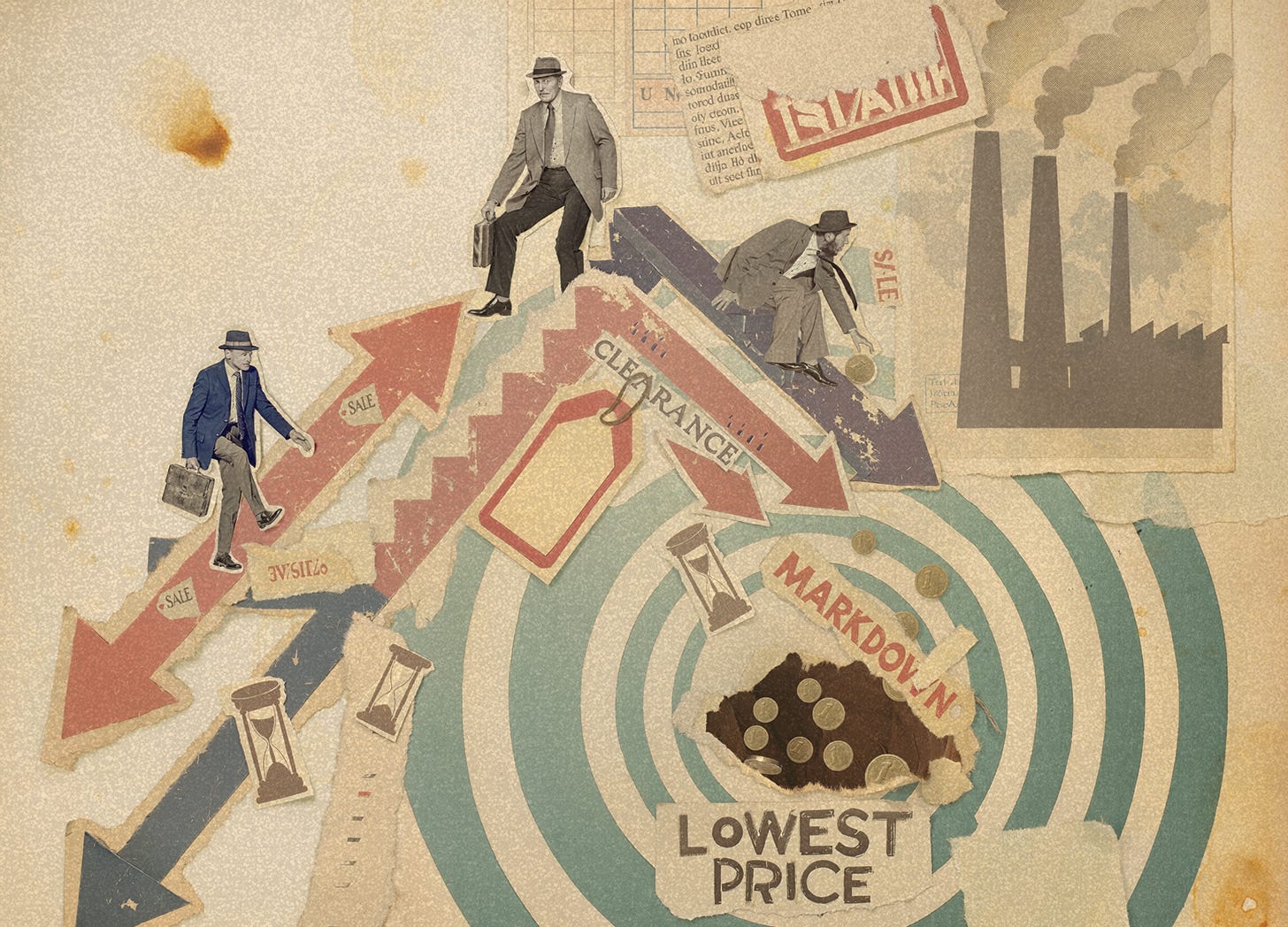
By Riggs D. Thermonucleon, with long-form patience from Prof. Reeve Bellows, PhD (Probably), who has requested fewer bullet points and more existential clarity
Is It Broken Or Just Designed That Way?
There is a strange comfort in believing that when things feel wrong, something must be broken.
A faulty policy.
A bad actor.
A temporary disruption.
Something identifiable.
Something fixable.
But what if the discomfort isn’t coming from a failure?
What if it’s coming from a system working exactly as designed—just not for the outcomes most people assumed it was designed to produce?
If you step back from everything we’ve walked through this week, a pattern begins to emerge.
It’s not loud. It doesn’t announce itself. In fact, it hides behind very reasonable language—efficiency, optimization, flexibility, innovation. Words that sound like progress, because in many contexts, they are.
But underneath those words, something more mechanical is happening.
A gap appears.
Between two prices.
Between two places.
Between two sets of rules.
Between what something costs and what someone is willing—or forced—to pay.
And that gap doesn’t stay empty for long.
It becomes an opportunity.
Arbitrage Recap
Arbitrage, at its simplest, is the act of stepping into that space and collecting the difference. It doesn’t require invention. It doesn’t require transformation. It doesn’t ask whether the system is functioning well. It only asks whether two parts of the system are out of alignment.
If they are, the work begins.
Not to fix the misalignment, but to route value through it.
What’s changed is not the existence of arbitrage. That’s been around as long as markets have existed. What’s changed is how central it has become to the way the system operates.
It is no longer a side effect, it is a strategy.
And once it becomes a strategy, it starts to shape behavior in ways that are easy to miss if you’re only looking at outcomes.
Because the outcomes can look… fine.
Jobs still exist.
Products are still available.
Markets still function.
On paper, the system continues to perform. But if you trace the flow of value more carefully, you start to notice something. A growing portion of activity is not focused on building within systems.
It’s focused on navigating between them.
Examples
A company doesn’t necessarily improve production—it finds a lower-cost jurisdiction.
A financial firm doesn’t necessarily invest in long-term value—it identifies short-term movement.
A platform doesn’t necessarily create demand—it captures attention before it stabilizes.
Each of these decisions makes sense in isolation. Each can be defended, explained, justified. The language is polished. The logic is sound.
But collectively, they point in a direction. If you keep an eye on the daily news stories, the pattern is undeniable.
When the most reliable profits come from the gaps between systems,
the system begins to organize itself around those gaps.
That Creeping Feeling
This is where the feeling starts.
Not a crisis.
Not a collapse.
A subtle shift.
You notice that things require a little more effort than they used to. That stability feels less guaranteed. That outcomes seem slightly disconnected from inputs.
You work hard.
You do the right things.
And yet the results feel… less predictable.
Reality Check
That’s not your imagination.
It’s what happens when value is increasingly extracted at the seams rather than generated at the center. The system doesn’t stop working, it merely starts distributing pressure differently.
The tricky part is that this kind of system can persist for a long time, long enough to feel normal. Long enough for the language around it to solidify.
We stop calling it arbitrage.
We call it strategy.
“Legal” Doesn’t Mean “Right”
To be fair, arbitrage is strategy, it’s just one that depends on imbalance: on differences that can be measured, navigated, and monetized.
This creates an interesting incentive, not to eliminate those differences, but to find them faster, stay inside them longer, and scale them if possible.
Why close the gap
when the gap is paying you?
The Story Goes Deeper
At this point, it’s tempting to draw a hard conclusion. To say the system is broken, corrupted, beyond repair.
That would be satisfying. But, it would also be inaccurate. Because the system is doing exactly what it was built to do: responding to incentives.
And incentives, unlike systems, are adjustable.
This is the part that matters. Arbitrage exists, and will always exist in some form. Differences are inevitable. Systems are imperfect. Alignment is never complete. Simple truths.
The question is what the system rewards.
Does it reward closing gaps, or exploiting them?
Does it prioritize long-term stability, or short-term capture?
Does it treat imbalance as a problem to solve, or a feature to scale?
These are not abstract questions. They show up in policy, corporate behavior, and how work is structured and markets operate. And they are not decided once, they are decided continuously.
But this means the system can change. Maybe not easily, nor quickly, but directionally. Because systems don’t have intentions. People do.
And people, collectively, decide what gets reinforced.
The Pattern Made Visible
There’s a tendency to think of arbitrage as something distant. Something that happens in financial markets or multinational corporations or regulatory frameworks that feel far removed from everyday life.
But by now, you’ve probably noticed that’s not quite true. Arbitrage is much closer than one might think.
It shows up in pricing.
In employment.
In access to information.
It shapes the conditions you operate within, even if you’re not directly participating in it.
The good news—if you can call it that—is that awareness changes your position. When you understand that the system rewards navigation of gaps, you start to see where those gaps are. You start to recognize when something is being optimized for extraction rather than creation.
You start to ask better questions. And better questions are where systems begin to shift.
Learn the System Beneath the Strategy
If this week felt like peeling back a layer, that’s because it was.
Riggs University’s “Business and Economics for the Bold and Brazen” explores the incentives beneath the outcomes—so you can see not just what’s happening, but why.

Subscribe to the Daily Dispatch
Daily essays on business, economics, and the systems shaping modern life.
Subscribe before the next “strategy” gets rebranded.
Share the Lab
Know someone who feels like things are working… but not quite working for them?
Send them this.
The Grifter’s Glossary
For when the system starts sounding more intentional than it is:
https://falsepositivelabs.substack.com/p/false-positive-labs-grifters-glossary
Just In Case You Didn’t Guess…
This article is satire and commentary. It is not economic policy, investment strategy, or guidance on monetizing structural inefficiencies.
If you find yourself standing in a gap, please check for incoming traffic.
Caffeine powers the world. Help False Positive Labs continue to be caffeine achievers.
